
“N culture” describes a community-building approach that centers the voices and leadership of those most impacted by systemic inequity, creating space for honest dialogue about power, privilege, and belonging while actively dismantling barriers to participation. Unlike traditional consultation models that extract knowledge without sharing decision-making authority, this framework embeds equity into every stage of community work, from initial visioning through implementation and evaluation.
The concept emerged from grassroots movements across Canada where practitioners noticed a pattern: initiatives designed “for” communities consistently fell short, while those designed “with” and “by” communities created lasting transformation. The difference wasn’t just semantics. When community members held real power to shape priorities, allocate resources, and define success on their own terms, projects became more responsive, more sustainable, and more likely to address root causes rather than symptoms.
This matters right now because communities across Canada are grappling with complex challenges that demand collaborative solutions. Organizations working to build healthy communities have learned that top-down interventions rarely succeed. The barriers facing Indigenous communities, newcomers, racialized groups, and other marginalized populations require approaches that honor lived experience as expertise and redistribute power as a core strategy, not an afterthought.
What makes “n culture” powerful is its practicality. This isn’t abstract theory. Community organizations in Vancouver, Toronto, Halifax, and dozens of smaller cities have already adopted these principles, achieving measurable results in housing access, youth engagement, food security, and reconciliation efforts. The framework provides concrete methods for shifting organizational culture, restructuring decision-making processes, and measuring impact through an equity lens.
What “n Culture” Means for Social Justice Work
The term “n culture” emerged from the recognition that effective social justice work cannot follow a singular, prescriptive path. Rather than representing a fixed methodology, it describes an adaptive cultural approach where the “n” stands for the multiplicity of perspectives, strategies, and voices that must coexist within equity-focused movements. This framework gained traction in Canadian community spaces around 2024, as practitioners noticed that traditional advocacy models, often designed around single-issue campaigns or hierarchical organizational structures, were struggling to address the intersecting nature of contemporary injustices.
At its heart, n culture represents a shift from binary thinking to complexity-holding. Where conventional advocacy might frame issues as clear-cut battles between right and wrong, n culture acknowledges that communities contain multiple truths simultaneously. An Indigenous-led food sovereignty initiative, for instance, might need to honour traditional knowledge systems while partnering with municipal governments, addressing food insecurity while healing from colonial trauma, and creating economic opportunities while protecting cultural practices. N culture provides the conceptual framework to hold all these dimensions at once without flattening or prioritizing one over others.
- N Culture
- An adaptive approach to social justice that centres multiplicity, allowing diverse perspectives and strategies to coexist and strengthen collective action rather than compete for dominance.
- Complexity-Holding
- The practice of maintaining space for contradictions, tensions, and multiple truths without rushing to resolution or false consensus.
- Adaptive Collaboration
- Flexible partnership models that shift roles, leadership, and strategies based on community needs rather than predetermined organizational structures.
- Intersectional Practice
- Action that acknowledges how various forms of oppression and identity overlap, requiring responses that address multiple dimensions simultaneously.
What makes this approach particularly relevant for Canadian community renewal is our context. We’re working within a colonial state structure while supporting Indigenous sovereignty, building multicultural communities while addressing systemic racism, and pursuing environmental justice while respecting diverse relationships to land. Traditional advocacy models, designed for more singular objectives, often force practitioners to choose which aspect of justice to prioritize. N culture offers a way forward that refuses those false choices.
This isn’t about abandoning strategy or accepting every approach as equally valid. Instead, it’s about building the capacity to discern which voices need centering in specific moments, which tactics serve the broader movement, and how seemingly contradictory goals can actually reinforce each other when held with intention and care.
The Core Principles That Make “n Culture” Work

Building from the Ground Up
In ‘n culture’ approaches, the people most affected by an issue lead the design and delivery of solutions. This isn’t consultation where communities provide input on someone else’s plan, it’s actual decision-making power transferred to those who live the reality every day.
A youth harm reduction program in Halifax demonstrates this shift. Instead of health authorities determining what services young people need, they hired youth with lived experience to shape programming, set priorities, and allocate resources. The result? Triple the engagement rates compared to traditional programs, because the services actually matched what youth knew they needed.
This ground-up model requires funders and institutions to get comfortable with uncertainty. Communities might choose approaches that look different from proven models. They’ll move at their own pace, guided by relationships rather than project timelines. But when you trust grassroots leadership, you get solutions that stick because they’re rooted in authentic understanding of local context, culture, and what’s actually possible within existing community strengths.
The power doesn’t just shift once. It stays shifted.
Embracing Multiple Truths
Traditional justice work often searches for the single “right” answer, one policy, one solution, one voice that speaks for everyone. ‘N culture’ flips that script. It recognizes that a housing crisis looks different to a newcomer family, a senior on a fixed income, and a young person aging out of foster care. All three experiences are valid. All three truths matter.
This isn’t about avoiding difficult conversations or pretending conflicts don’t exist. It’s about building the capacity to hear multiple realities at once without rushing to flatten them into comfortable agreement. When communities create space for this complexity, something shifts. People stop performing consensus and start sharing what’s actually happening in their lives.
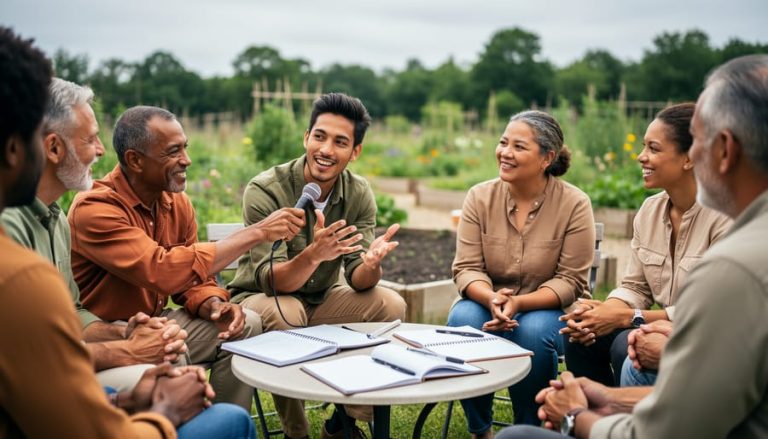
Community storytelling becomes essential here, not as a feel-good exercise, but as a method for surfacing the tensions and overlaps that lead to better solutions. A circle where an Indigenous elder, a Black youth organizer, and a disability rights advocate can each name their truth creates richer understanding than any single expert report.
The work isn’t to resolve every difference. It’s to ensure decisions get made with full awareness of who they affect and how.
Success Stories: Canadian Communities Embracing “n Culture”
Environmental Justice Meets Cultural Renewal

In British Columbia’s Fraser Valley, the Stó:lō Research and Resource Management Centre demonstrates how environmental protection becomes stronger when rooted in cultural knowledge and community healing. Rather than separating ecological restoration from cultural practice, Stó:lō leaders designed a river stewardship program where youth learn traditional fishing methods, water quality monitoring, and ceremonial protocols simultaneously. Elders teach the science of salmon migration alongside stories that have guided sustainable harvests for thousands of years.
This approach doesn’t just preserve heritage, it creates new environmental advocates who understand watershed health through both Western science and ancestral wisdom. When development threatened a critical spawning ground in 2024, youth trained in the program presented testimony combining stream temperature data with oral histories their grandparents shared. The development was redirected, and the community launched a healing ceremony at the restored site, recognizing how colonial disruption of land also fractured relationships within families.
The initiative’s funding now supports mental health counselling alongside riparian restoration, acknowledging that healing land and healing people happen together. This work connects directly to broader Truth and Reconciliation commitments by demonstrating that Indigenous-led stewardship offers practical pathways forward, not just symbolic gestures. Over three years, stream health improved measurably while community members reported feeling more connected to both the land and each other, proof that environmental justice and cultural renewal aren’t separate goals but intertwined necessities.
Youth-Led Gender Equity Programs

In Vancouver’s Downtown Eastside, a group of teenagers from Syrian, Filipino, and Coast Salish backgrounds launched a weekly drop-in space that became a quiet revolution. Rather than imposing a single definition of gender equity, they created a program where each participant could share what safety and respect meant within their own cultural context.
The youth facilitators discovered that some participants needed time to reconcile family teachings with evolving understandings of gender identity. Instead of demanding immediate alignment, they built trust through shared activities, cooking traditional foods, creating art, playing sports, where conversations about identity emerged organically. A Syrian teen might explain how their grandmother’s feminism looked different from Western models. A Two-Spirit youth could share protocols for gender diversity rooted in Indigenous tradition.
Within six months, attendance tripled. Parents who initially resisted began volunteering, seeing their children honoured rather than rejected. The program demonstrated that challenging harmful norms doesn’t require abandoning cultural heritage. Young people proved they could hold both respect for tradition and commitment to equity, creating space for everyone to grow at their own pace while moving collectively toward justice.
Practical Steps to Bring “n Culture” Into Your Work

Starting with ‘n culture’ principles doesn’t require a complete overhaul of your existing work, it begins with small, intentional shifts in how you engage with communities and make decisions. These adjustments can create space for more inclusive and adaptive approaches to emerge naturally over time.
- Listen before leading. Spend dedicated time with community members whose voices haven’t traditionally shaped your initiatives. Host informal gatherings, conduct listening sessions, or simply sit down for coffee conversations. Ask what people need rather than presenting what you’ve already decided to offer.
- Map your power dynamics. Identify who currently makes decisions in your organization and whose perspectives are missing from those conversations. Create opportunities for people with lived experience of the issues you’re addressing to hold decision-making authority, not just advisory roles.
- Start one small experiment. Choose a single project or program where you can practice ‘n culture’ approaches without risking everything at once. Maybe it’s letting a youth advisory group set their own priorities and budget, or co-designing a new initiative with community members from the beginning rather than asking for feedback on a finished plan.
- Measure what matters to communities. Shift your evaluation metrics to include indicators that communities identify as meaningful, belonging, cultural connection, self-determination, alongside traditional outcomes. Ask participants to define success in their own terms.
- Build learning into your rhythm. Schedule regular reflection sessions where your team honestly discusses what’s working and what needs adjustment. Invite community partners to share their observations about your approach, and be prepared to hear uncomfortable truths.
- Share resources and credit generously. Look for ways to bring people together across organizational boundaries and redistribute funding, space, and recognition to grassroots initiatives doing aligned work.
These steps work best when adapted to your specific context rather than followed rigidly. A rural community organization will approach power-sharing differently than an urban policy group, and that’s exactly the point, ‘n culture’ asks us to respond to the actual people and circumstances we’re working with, not replicate someone else’s model. What matters is moving from consultation theater toward genuine shared leadership, even if that shift happens incrementally. You’ll know you’re on the right track when community members start bringing their own ideas and priorities to the table without waiting for permission.
Navigating the Challenges Together
Adopting n culture practices brings meaningful rewards, but let’s be honest about the bumps along the way. Many organizations face pushback when they start shifting power to community members who haven’t traditionally held decision-making authority. Long-standing board members or funders might question why “the way we’ve always done it” needs to change. This resistance often stems from fear rather than malice, fear of losing control, making mistakes, or discovering uncomfortable truths about past approaches.
Resource constraints hit hard too. N culture requires time for relationship-building, listening sessions, and collaborative planning that don’t fit neatly into grant timelines or quarterly reports. One Edmonton nonprofit leader shared, “Our funders wanted deliverables by month three, but we were still building trust with community members who’d been burned by outsiders before.” The solution? They renegotiated timelines by showing funders how rushed processes had failed previously, and slower relationship-building produced better outcomes.
Power dynamics don’t disappear just because we acknowledge them. Even well-intentioned practitioners can unconsciously dominate conversations or default to expert-driven solutions. Regular check-ins help: “Whose voices are missing from this decision? Who’s doing most of the talking?” Creating explicit space for quieter participants and rotating facilitation responsibilities shifts these patterns gradually.
Maintaining momentum through setbacks tests everyone’s commitment. When a promising initiative stalls or community partners disengage, it’s tempting to abandon collaborative approaches and revert to top-down efficiency. This is where connecting your work to broader goals around health and wellness helps sustain purpose. Remember that building n culture is itself a community renewal process, messy, non-linear, and worth the persistence. Celebrate small wins, learn from missteps openly, and keep returning to the core question: who benefits from how we’re doing this work?
Where “n Culture” Is Taking Us Next
The evolution of ‘n culture’ in Canadian communities points toward a future where justice work becomes more fluid, responsive, and deeply interconnected across movements and geographies.
We’re already seeing urban Indigenous collectives partner with rural immigrant settlement agencies, sharing strategies that honour distinct experiences while building common ground. These cross-pollination efforts create networks of mutual support that didn’t exist five years ago. The practitioners leading this work report feeling less isolated and more resourced, even when funding remains tight.
Digital platforms are emerging that connect grassroots organizers across provinces, allowing a housing justice group in Halifax to learn from tenant organizing in Vancouver while maintaining local autonomy. This technology isn’t replacing face-to-face relationship building, it’s amplifying it, making collaboration possible across distances that once felt insurmountable.
Perhaps most significantly, ‘n culture’ approaches are influencing how institutions design programs and allocate resources. Government agencies and larger foundations are experimenting with participatory budgeting, community-led evaluation frameworks, and funding models that prioritize relationship building over deliverables. These shifts remain uneven and sometimes tentative, but they represent cracks in systems that have long resisted change.
The next frontier involves bringing ‘n culture’ principles into formal policy development. Several municipalities are piloting citizen assemblies that centre marginalized voices in decision-making about public space, policing, and environmental planning. These experiments offer blueprints for scaling grassroots wisdom into structural transformation.
The trajectory is clear: ‘n culture’ isn’t staying contained within the non-profit sector. It’s beginning to reshape how we imagine governance, accountability, and collective problem-solving across every level of Canadian society.
The shift toward ‘n culture’ isn’t about perfection, it’s about direction. Across Canada, communities are proving that when we center lived experience, embrace complexity, and commit to collaboration, we create justice initiatives that don’t just address symptoms but transform root conditions.
You don’t need a complete framework or ideal circumstances to begin. Start with one conversation that makes space for voices usually unheard. Question one assumption embedded in your organization’s practices. Connect with one group doing work that challenges your understanding. These small pivots compound into cultural shifts that ripple far beyond what any single organization can achieve alone.
The communities already embracing these principles show us what’s possible: environmental justice that heals cultural wounds, youth programs that honor both tradition and evolution, neighborhood initiatives that turn conflict into creative collaboration. They’re not waiting for permission or perfect conditions. They’re building as they go, learning from missteps, and inviting others into the process.
This work needs you, your context, your relationships, your willingness to stay curious even when it’s uncomfortable. Community Renewal exists to support practitioners navigating this journey, sharing stories, strategies, and solidarity along the way.
The culture we’re creating together isn’t fixed or finite. It adapts, listens, and grows stronger through our collective commitment to justice that includes everyone at the table. What will you bring to it?