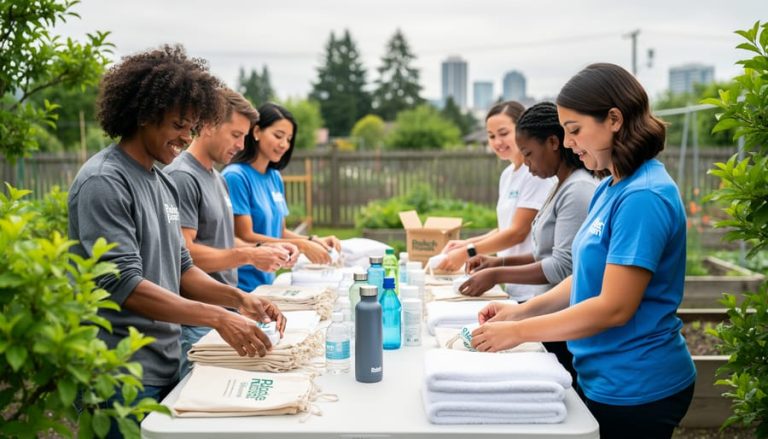
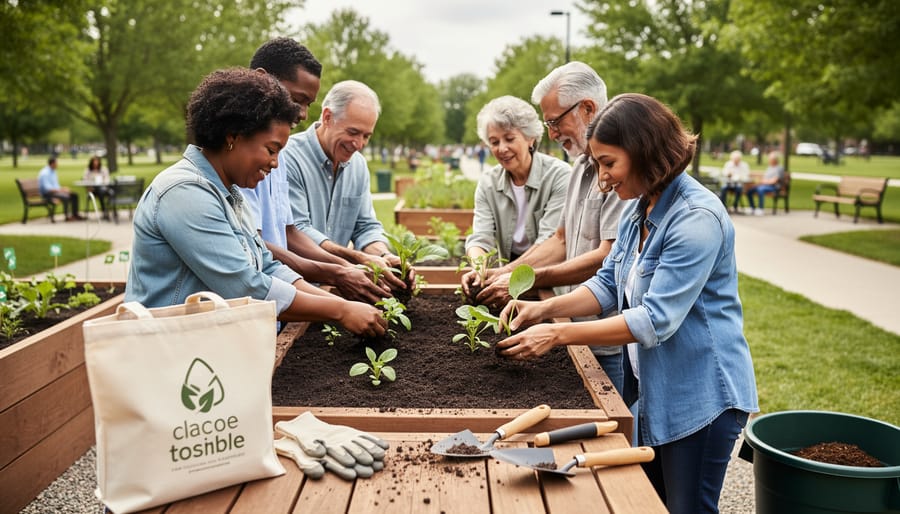
Building sustainable communities happens when neighbours gather with intention, when local events become catalysts for lasting community transformation rather than fleeting entertainment. The most effective community organizers understand that a well-planned event does more than fill a Saturday afternoon. It weaves connections between residents, strengthens local networks, and plants seeds for collaborative projects that outlive the cleanup crew.
Across Canada in 2026, community leaders are discovering what distinguishes a memorable gathering from one that fundamentally shifts how neighbours relate to each other and their shared spaces. The difference lies in approaching events as infrastructure, as deliberate investments in social capital that compound over time.
This shift matters because communities facing environmental challenges, social fragmentation, or economic uncertainty need more than good intentions. They need practical strategies that turn enthusiasm into momentum. When a neighbourhood cleanup evolves into a community garden project, or a cultural festival sparks an ongoing dialogue about local food systems, events prove their worth as development tools.
The path forward requires balancing inspiration with execution. You’ll need frameworks that help you design events with sustainability woven into every decision, from waste reduction to inclusive participation. You’ll benefit from seeing how other communities have transformed single gatherings into movements that reshape local priorities and behaviours.
Whether you’re a non-profit leader planning your first community event or a municipal planner refining existing programs, the principles remain consistent. Success comes from understanding both the underlying purpose of community events and the tactical steps that turn vision into measurable impact. This means knowing which metrics matter, how to engage diverse stakeholders authentically, and how to build momentum that carries forward long after the folding tables are packed away.
Why Events Are the Foundation, Not the Frosting
When we talk about community events, most people picture the fun stuff: festivals, block parties, neighbourhood barbecues. They’re easy to dismiss as nice-to-have additions that bring some temporary cheer but don’t change anything fundamental. That’s backwards. Community events aren’t decorative touches on sustainable development work, they’re load-bearing walls.
Events create the conditions that make everything else possible. Before a community can successfully launch a tool library, organize neighbourhood composting, or develop a local food system, people need to know each other. They need a baseline of trust. They need to have had conversations that reveal shared concerns and complementary skills. Events are where that happens, often in ways that formal meetings and planning processes can’t replicate.
Consider what unfolds when neighbours gather at a community garden workday or a climate action workshop. Yes, they learn about composting techniques or home energy audits. But the real value lies in the woman who mentions she’s been wanting to start walking to work and discovers three neighbours who work near her office. It’s in the retired teacher who offers to help with literacy programs and the newcomer family who finally feels connected to their street. These durable community relationships become the foundation for projects nobody planned in advance.
Events also establish patterns. When a community gathers regularly, monthly repair cafes, seasonal festivals, quarterly workshops, people start expecting collaboration. They internalize the idea that solving problems together is normal, not exceptional. This shift in collective mindset matters more than any single initiative because it creates an environment where new ideas can take root quickly.
The evidence shows up when you track what happens after good events. Communities that invest in regular, well-designed gatherings develop stronger networks of mutual support, faster responses to crises, and higher participation in local initiatives. That’s because events don’t just support community well-being they generate the social capital and shared identity that sustainable communities run on. Without that foundation, even the best programs struggle to gain traction.
The Three Pillars of Event-Driven Community Building

Connection: Building the Web That Holds Everything Together
Every sustainable community sits on an invisible infrastructure that no municipal budget can buy: the web of relationships between neighbours who know each other’s names, skills, and stories. Community events create the conditions for these connections to form naturally, giving people permission to talk to strangers who live three doors down but might as well live in another city.
When Margaret attended her neighbourhood’s first community potluck in Toronto’s Parkdale, she didn’t expect to meet the contractor who’d later help weatherize her elderly neighbour’s home at cost, or the teacher who’d start an after-school program in her living room. But events create what sociologists call “weak ties”, connections between people from different social circles that become bridges for resources, information, and support to flow across a community.
The magic happens in the margins. It’s the ten minutes before the presentation starts, the lineup at the food table, the walk to the parking lot. These unscripted moments allow relationships to begin without agenda or pressure. Over time, these casual acquaintances deepen into networks of mutual aid that don’t require formal organizations or funding to function, they just need regular opportunities to exist.
Knowledge: Sharing What Works (And What Doesn’t)
Events create rare permission for people to admit what hasn’t worked. At a 2025 neighbourhood sustainability fair in Saskatoon, a community garden coordinator shared how their first composting system attracted rats, and within minutes, three other attendees offered solutions they’d tested. That exchange saved months of trial and error for everyone listening.
This knowledge-sharing accelerates community development because it bypasses the isolation that makes every group reinvent the wheel. When organizers structure events around peer learning, storytelling circles, problem-solving workshops, failure debriefs, they tap into collective intelligence that no single expert possesses. A Charlottetown climate action event used “trading post” sessions where participants rotated through stations sharing specific tactics: winterizing community spaces, accessing municipal grants, recruiting volunteers across generations.
The most valuable knowledge shared at these gatherings isn’t polished best practices but context-specific adaptations. How one neighbourhood modified a tool kit for renters. Which local suppliers donate materials. What worked in March but failed in November. This granular, place-based wisdom doesn’t travel through reports or webinars, it needs face-to-face exchange where people can ask follow-up questions and compare notes on shared constraints like climate, budget, or municipal regulations.
Action: From Conversation to Collaboration
The real test of any community event isn’t what people say during it, it’s what they do after. This is where many gatherings fall short: participants leave energized but with no clear pathway from enthusiasm to execution.
Effective events build action directly into their structure. The Repair Café movement demonstrates this brilliantly. Participants don’t just attend workshops about reducing waste; they bring broken items, learn repair skills hands-on, and leave with functioning objects and new capabilities. The event itself is the action, not just preparation for it.
Similarly, community planning sessions that end with specific working groups, named volunteers, and scheduled next meetings convert talk into tangible progress. When Vancouver’s Grandview-Woodland neighbourhood held sustainability forums, organizers ensured each session concluded with signup sheets for three concrete projects: a tool library, community composting hub, and neighbourhood repair network. Within six months, all three existed because commitment was captured while motivation peaked.
The key is making the transition from participant to contributor feel natural, immediate, and achievable. Small, defined first steps matter more than ambitious plans that overwhelm.
Success Stories: Communities That Got It Right
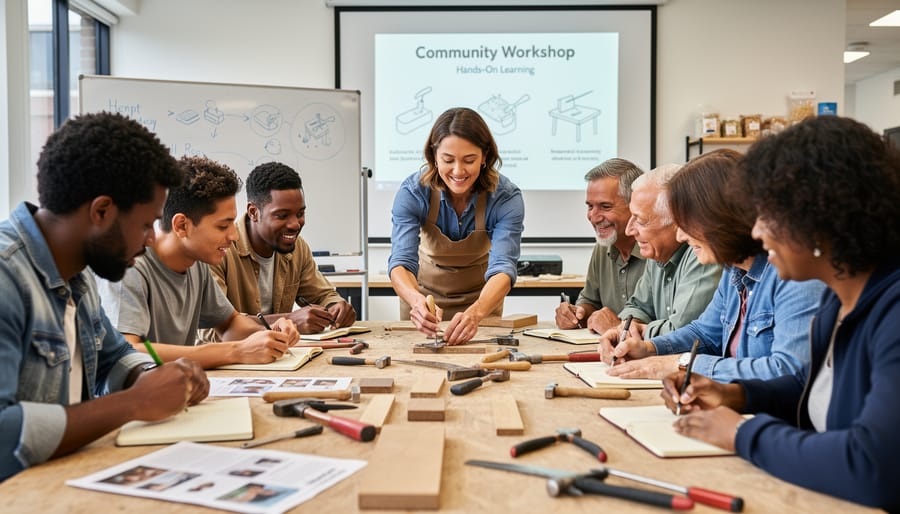
In a Vancouver neighbourhood where most residents didn’t know their next-door neighbours’ names, a series of monthly repair cafés changed everything. What started as a simple event where people could fix broken appliances and mend clothing became the launching pad for Vancouver’s Mount Pleasant Zero Waste Network. The cafés created repeat touchpoints where the same faces appeared month after month, transforming strangers into collaborators. Within eighteen months, this network had established a tool library, a community composting program, and a neighborhood food cooperative, all staffed by volunteers who first met over a broken toaster or a torn jacket. The organizers credit their success to consistency rather than flash, the same venue, the same third Saturday, the same welcoming faces created the predictability that allowed trust to deepen.
In rural Nova Scotia, the town of Wolfville took a different approach. Their annual “Skills Share Festival” deliberately spotlights local knowledge holders, the farmer who grows heritage seeds, the carpenter who builds with reclaimed materials, the grandmother who preserves food without electricity. These aren’t celebrity speakers flown in from elsewhere; they’re neighbors teaching neighbors, which shifts the community’s sense of what expertise looks like. The festival’s structure reserves afternoon sessions for project brainstorming, where attendees form teams around shared interests. This design choice has spawned a community-owned solar installation, a seed bank, and an intergenerational mentorship program linking retirees with young entrepreneurs. Five years in, organizers report that 73% of festival attendees have joined at least one ongoing initiative, a participation rate that speaks to the power of creating events where people see their own skills valued and their ideas taken seriously.
The Pimicikamak Cree Nation in Manitoba demonstrates how cultural events can anchor both identity and economic resilience. Their seasonal gatherings around traditional practices, spring fish camps, summer berry harvests, fall moose hunts, serve multiple functions simultaneously. Young people learn ancestral skills while elders pass down ecological knowledge tied to the land. These gatherings also became the foundation for developing sustainable tourism programs that bring revenue back to the community without extracting resources or compromising values. By centering events around honouring truth and lived cultural practices rather than abstract sustainability concepts, the nation built a development model rooted in continuity rather than disruption. The events themselves generate income through food sales and craft markets, creating an economic engine that funds year-round programs for language revitalization and land stewardship.
Designing Events That Create Momentum, Not Just Memories
Start With Listening, Not Planning
The best community events don’t begin with a venue booking or a Pinterest board, they start with conversations. Before you settle on a format, theme, or date, invest time in genuine listening. Hold informal coffee chats, send out a simple survey, or host a casual gathering where people can share what they actually need rather than what you assume they want. Ask open questions: What challenges keep you up at night? What would make this neighborhood feel more connected? Where do you already gather naturally?
This listening phase reveals the real gaps in your community and uncovers existing strengths you might have overlooked. You’ll discover informal leaders, hidden talents, and local success examples that can inform your approach. More importantly, this consultation builds buy-in from the start, people support what they help create. When residents see their input reflected in the event design, they show up not as passive attendees but as co-creators invested in the outcome.
Create Pathways for Continued Involvement
The most effective community events end with participants knowing exactly what they can do next, and that “next” needs to be concrete, accessible, and available immediately.
Build sign-up opportunities directly into your event flow. Don’t wait until the closing remarks to mention future involvement. Instead, place stations throughout your venue where people can join specific working groups, volunteer for defined roles, or commit to attending the next planning meeting. Make these ask specific: “Join the community garden design team” works better than “Stay involved in sustainability efforts.”
Schedule your follow-up gathering before people leave. Choose a date and location for the next meeting during the event itself, announce it multiple times, and have participants add it to their calendars on the spot. Communities that set firm follow-up dates within two weeks of an event see 60-70% higher continued participation than those who promise to “be in touch soon.”
Create graduated involvement options that respect different capacity levels. Not everyone can commit to weekly meetings, but many will contribute to a monthly work party, review documents online, or host a single neighborhood conversation. One Vancouver initiative offers five distinct participation levels, from “email updates only” to “core planning team”, letting people choose their entry point without guilt.
Capture contact information thoughtfully. Use sign-in sheets organized by interest area rather than generic attendance lists, and follow up within 48 hours while energy remains high. That first follow-up email should remind people what they signed up for and confirm the immediate next step they committed to taking.
Make Space for Unexpected Connections
The most transformative conversations at community events rarely happen during formal presentations, they occur in the coffee line, during the walk to the parking lot, or when two strangers discover a shared passion while waiting for the washroom. Yet many organizers pack schedules so tightly that these spontaneous connections never get a chance to bloom.
Build breathing room into your event design. If you’re planning a three-hour gathering, leave at least 45 minutes unstructured. This isn’t wasted time, it’s where the magic happens. One Vancouver neighbourhood association discovered that their best sustainability initiatives emerged not from their planned workshops but from casual conversations during extended coffee breaks, when a retired engineer met a young parent concerned about schoolyard runoff and they sketched a rainwater garden on a napkin.
Open space technology takes this further by inverting the traditional conference model. Participants propose discussion topics on the spot, self-organize into conversation circles, and follow the “law of two feet”, if you’re not learning or contributing, move to another group. This approach trusts people to know what matters most and creates permission for unexpected partnerships.
Consider reserving a corner of your venue as an “ideas incubator” where people can post project concepts, resource offers, or collaboration requests. Add sticky notes and markers. Watch connections form organically as attendees browse, comment, and cluster around shared interests without needing a facilitator to broker every introduction.
Common Pitfalls (And How to Avoid Them)
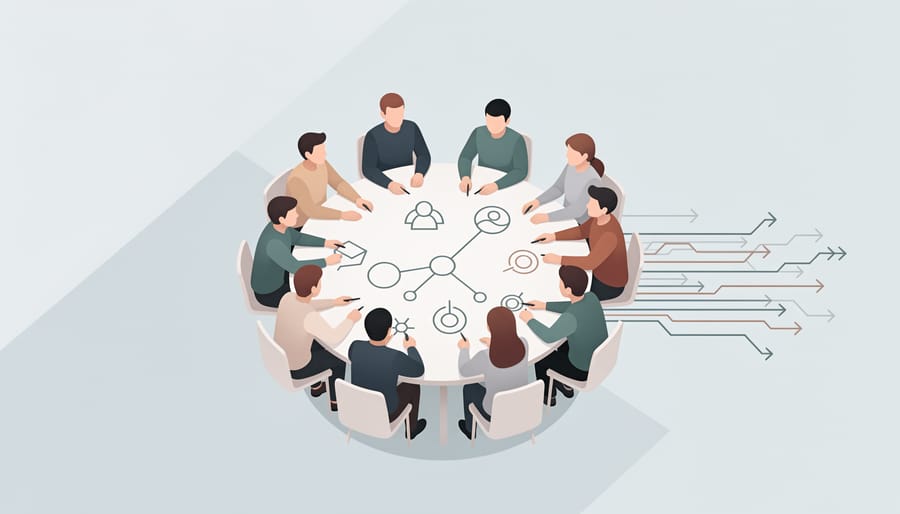
Even experienced organizers trip over the same obstacles when planning community events. The difference between events that fizzle and those that spark lasting change often comes down to avoiding a handful of predictable mistakes.
The most common error is planning in isolation. When a small committee designs everything behind closed doors, they inevitably create an event that reflects their own interests and availability rather than the community’s actual needs. The fix is straightforward but requires humility: involve potential participants from the very beginning. A Hamilton neighborhood association learned this the hard way when their carefully planned environmental fair attracted only 12 people. They’d scheduled it during harvest season, a time when their large farming community was impossible to reach. The following year, they formed a planning committee that included farmers, and attendance jumped to over 200.
Another trap is the “bigger is better” mindset. Organizers assume they need impressive attendance numbers to justify the effort, so they book large venues and pour resources into promotion. But sustainable community building happens through meaningful interaction, not crowd size. A Charlottetown group found greater success hosting monthly gatherings for 30 people in a community center than their previous annual festivals for 300. The smaller format allowed genuine conversations and follow-up became manageable.
| Common Pitfall | Warning Signs | Solution |
|---|---|---|
| Planning in isolation | Same people at every meeting; decisions made quickly; assumed understanding of community needs | Form diverse planning committee; conduct pre-event consultations; test ideas with target participants |
| Over-programming the agenda | No breaks; back-to-back speakers; participants checking phones; rushed conversations | Schedule 30% unstructured time; limit formal presentations to 40% of total time; build in social breaks |
| Failing to plan for follow-up | No contact collection; vague “stay tuned” messaging; organizers exhausted after event | Announce next steps at the event; assign follow-up roles before event day; create simple participation pathway |
| Accessibility as afterthought | Venue chosen before access audit; childcare mentioned last minute; single format for all content | Start with access requirements; budget for interpretation and childcare; offer multiple participation modes |
Organizers also frequently cram too much into the schedule. They want to maximize the gathering by filling every minute with speakers, workshops, and presentations. This backfires spectacularly. People leave stimulated but disconnected, having absorbed information without forming the relationships that lead to collaboration. A Winnipeg climate action network cut their event programming by a third and added coffee breaks, open discussion periods, and a casual dinner. Participants formed three new working groups that night, something that hadn’t happened in their previous five events combined.
The final pitfall is treating accessibility as an add-on rather than a foundation. When organizers choose a venue first and then try to accommodate diverse needs, they inevitably leave people out. Communities serious about inclusion start by identifying barriers and designing around them from day one, not scrambling to arrange last-minute childcare or realizing too late that their venue has stairs but no elevator.
Building Your Event Series: Moving From One-Off to Ongoing
The jump from hosting a successful one-time gathering to running a sustainable event series feels like shifting from a sprint to a marathon, but the real shift is in thinking about infrastructure, not intensity.
Start by choosing a rhythm your community can sustain, not one that impresses outsiders. Monthly gatherings work for many neighborhoods because they’re frequent enough to maintain momentum without overwhelming volunteers. Quarterly events suit rural communities with longer travel distances or seasonal constraints. The schedule matters less than predictability, people need to know when the next gathering happens before they leave the current one.
Format variation keeps things fresh while serving different participation styles. Alternate between large gatherings that energize and smaller working sessions that produce tangible results. A community garden network might rotate between skill-sharing workshops, hands-on planting days, and harvest celebrations. This rhythm attracts both learners and doers, preventing burnout among the action-oriented while giving newcomers multiple entry points.
Resource sustainability demands honest conversations early. Map what you have beyond money: a church basement available twice monthly, a teacher willing to facilitate discussions, three retirees with time for coordination. Build your series around these assets rather than chasing grants that might disappear. The Nanaimo community meal program survived a decade not because of funding but because it matched available volunteer energy with a manageable monthly commitment.
Ownership distribution prevents founder burnout and builds resilience. Rotate facilitation duties. Let different community members choose themes based on emerging needs. Create simple, documented processes so knowledge doesn’t live in one person’s head. When the original organizer of Edmonton’s climate action coffee talks moved cities, the series continued because a shared leadership team understood the basic framework.
Consider creating anchor events, an annual gathering that draws wider participation, supported by smaller monthly sessions that maintain relationships between big moments. This combination satisfies both the need for consistent connection and periodic celebration that attracts media attention and new participants. The anchor event becomes your community’s touchstone, while the smaller gatherings do the real relationship-building work that makes sustainable change possible.
Measuring What Matters: Beyond Attendance Numbers
When sixty-seven people show up to your community garden kick-off, you’ve got a number. But what does that number actually tell you about the relationships formed, the skills shared, or the likelihood that this garden will still be feeding people in three years?
Traditional event metrics, attendance counts, social media reach, volunteer hours, aren’t meaningless, but they’re incomplete. They measure activity, not transformation. The real question isn’t how many people came, but what changed because they did. That shift in perspective fundamentally alters what to measure when you’re trying to understand whether your events are building sustainable communities or just creating pleasant Saturday mornings.
Start tracking indicators that reflect genuine connection and capacity:
- Number of new collaborative projects initiated by participants who met at your event
- Diversity of participation across age, background, and experience levels compared to previous gatherings
- Frequency of ongoing communication between participants in the weeks following the event
- Concrete skills or knowledge participants report applying in their own contexts
- Leadership emerging from unexpected sources within the community
- Resources (time, money, expertise) that participants commit to shared initiatives
- Follow-up participation rates in working groups or next-phase activities
These indicators require different collection methods than sign-in sheets. Try brief follow-up surveys six weeks after your event, asking specific questions about actions taken and connections maintained. Conduct informal phone interviews with a sample of participants to hear stories that numbers can’t capture. Track which event attendees show up to planning meetings or volunteer for implementation work.
The most telling measure might be the simplest: when you announce your next event, do the same faces appear alongside new ones, bringing their neighbors? That pattern signals you’re not just hosting events, you’re building the connective tissue that holds communities together through seasons of change and challenge.
The truth about building sustainable communities is surprisingly simple: they don’t emerge from perfect plans or expensive consultants. They grow from ordinary people who decide to show up, listen to their neighbors, and create spaces where connection becomes possible.
You’ve seen throughout this article how events serve as the scaffolding for this work. They’re not the end goal, they’re the beginning. Each gathering creates ripples that extend far beyond the day itself, weaving networks of trust, sparking collaborations you never anticipated, and revealing the hidden talents sitting right next door.
The communities transforming themselves across Canada didn’t wait for ideal conditions or massive budgets. They started with what they had: a borrowed community hall, a potluck in someone’s backyard, a simple invitation to neighbors who’d never spoken before. What made the difference wasn’t the scale of their first event but their commitment to keep going, to learn from what didn’t work, and to build on what did.
Your community already has everything it needs. The knowledge lives in the minds of your neighbors. The passion exists in people who care deeply about where they live. The potential for collaboration is sitting dormant, waiting for someone to create the conditions where it can flourish.
That someone can be you.
Start small. Host a conversation. Invite people to imagine what’s possible together. Then create a pathway for that inspiration to become action. The sustainable community you’re hoping to build won’t arrive fully formed, it’ll emerge one gathering, one connection, one shared project at a time.
The only question left is: when will you begin?