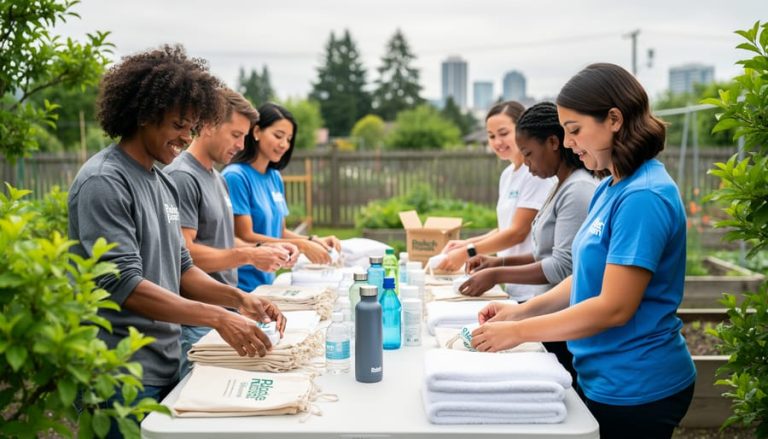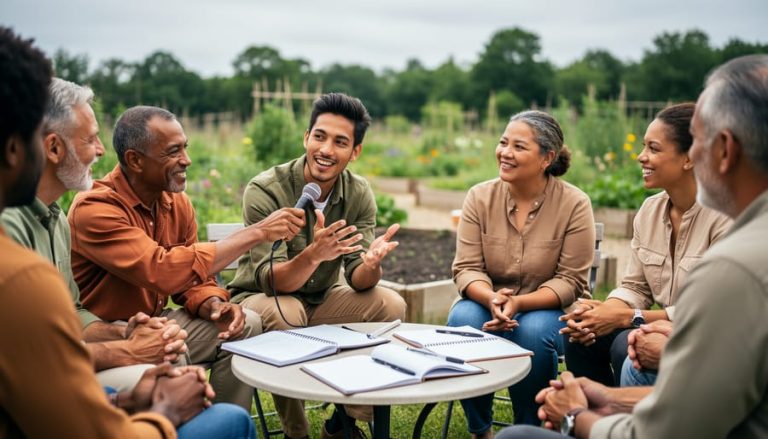

Developing a sustainable community means building a place where environmental health, social equity, and economic vitality support each other, creating lasting prosperity for everyone who lives there. It requires coordinated action across housing, transportation, energy, food systems, and public spaces, guided by the principle that today’s decisions should strengthen tomorrow’s opportunities. The good news? Communities across Canada are proving this isn’t just an abstract ideal. Real neighbourhoods are cutting emissions while creating jobs, growing local food while fighting isolation, and designing streets that connect people instead of dividing them.
The path forward depends on collaboration. When municipal staff, non-profit leaders, business owners, and residents work together, they create solutions no single group could achieve alone. A community garden addresses food security and builds relationships. Affordable housing near transit reduces both carbon footprints and commute stress. These interconnected benefits explain why healthy communities focus on systems, not isolated projects.
What makes a sustainability initiative succeed? Start with what matters most to your community. Listen first. A coastal town facing sea-level rise has different priorities than a prairie city managing extreme temperature swings, and both differ from a northern community balancing development with traditional land use. Effective strategies emerge from local knowledge, not imported blueprints.
This guide walks you through the essential building blocks, from renewable energy and green infrastructure to inclusive planning processes that ensure marginalized voices shape decisions. You’ll discover proven approaches used by Canadian communities, practical tools for getting started, and inspiring examples of what’s possible when people commit to building places that work for everyone, now and for generations ahead.
What Makes a Community Truly Sustainable
The Environmental Foundation

Environmental health forms the bedrock of every sustainable community. Without clean air, safe water, and functioning ecosystems, no amount of social programming or economic innovation can create lasting vitality.
Green infrastructure offers a powerful starting point. Rain gardens, bioswales, and permeable surfaces manage stormwater naturally while creating habitat and cooling urban heat islands. Community forests and green corridors connect residents to nature while filtering pollutants and sequestering carbon. These features don’t just beautify neighbourhoods, they perform essential ecological work that protects both people and planet.
Resource conservation shifts communities away from wasteful linear systems. Water efficiency programs, composting initiatives, and repair cafés keep valuable materials circulating locally rather than heading to landfills. Energy efficiency retrofits reduce household costs while cutting emissions, with programs increasingly supporting sustainable and affordable housing across diverse income levels.
Renewable energy adoption marks another crucial step. Community solar gardens, wind cooperatives, and district energy systems give residents ownership over clean power generation. These projects build energy independence while creating local jobs and keeping energy dollars in the community.
Climate resilience planning prepares communities for unavoidable changes. Flood mapping, emergency cooling centres, and drought-resistant landscaping protect vulnerable residents from extreme weather while maintaining quality of life through disruption.
Social Equity and Inclusion

A sustainable community stands or falls on how well it serves everyone who calls it home. Social equity means more than good intentions, it demands concrete action to ensure all residents can access what they need to thrive.
Affordable housing forms the foundation. When people are priced out of neighbourhoods, communities lose diversity, workers face impossible commutes, and social fabric frays. Sustainable communities protect and create mixed-income housing options, keeping teachers, artists, service workers, and families within reach of opportunities.
Accessibility extends beyond ramps and elevators. It encompasses transit routes that connect isolated neighbourhoods, libraries with extended hours, childcare near workplaces, and health and wellness services available in multiple languages. When services are genuinely accessible, participation becomes possible for parents juggling shifts, seniors with mobility challenges, and newcomers still learning the landscape.
Representation matters at decision-making tables. Sustainable communities intentionally create space for Indigenous voices, youth perspectives, disability advocates, and racialized residents in planning processes, not as token gestures but as equal partners shaping community direction. This shifts outcomes from what planners think people need to what communities know they require.
Economic Resilience That Lasts
A sustainable community’s economy thrives when it keeps money circulating locally while creating opportunities that don’t deplete resources. This means shifting from extractive industries toward regenerative models, green construction, renewable energy installation, ecological restoration work, that build wealth and heal landscapes simultaneously.
The circular economy offers a practical framework: designing waste out of systems, keeping materials in use longer, and regenerating natural systems. Local tool libraries, repair cafés, and refurbishment enterprises create jobs while reducing consumption. Community-supported agriculture connects farmers directly with consumers, strengthening food security and rural livelihoods.
Supporting local enterprises through preferential procurement policies, shared commercial kitchens, or maker spaces builds economic resilience that weathers external shocks. When communities invest in their own people and places, they create prosperity that stays put.
Building Blocks: Where to Begin Your Community’s Journey

Engaging Your Community Authentically
Authentic engagement starts by meeting people where they are, not where you want them to be. This means going beyond token consultations to create multiple pathways for participation that respect different communication styles, schedules, and comfort levels.
Begin by building relationships before you need them. Connect with established community organizations, cultural associations, neighbourhood groups, and faith communities who already hold trust with the populations you’re trying to reach. These bridges matter more than any single consultation event. When you do host gatherings, consider formats beyond standard public meetings. Kitchen table conversations, walking interviews, youth-led workshops, and digital storytelling sessions can reach people who’ll never show up at city hall.
Language accessibility is non-negotiable. Provide interpretation services, translated materials, and visual communication tools that don’t rely on text-heavy documents. Pay people for their time and expertise, especially those from marginalized communities who are constantly asked to educate and participate without compensation.
For meaningful engagement with Indigenous communities, Truth and Reconciliation principles must guide the process. This includes recognizing treaty relationships, respecting protocols, allowing sufficient time for consensus-building, and understanding that some knowledge may not be appropriate to share publicly.
Community events work best when they combine consultation with celebration, skill-sharing, or practical benefit. People engage more deeply when participation feels joyful and useful, not like homework. Close the feedback loop by showing participants how their input shaped decisions, even when you couldn’t accommodate every suggestion. Transparency about constraints builds trust for future conversations.
Setting Shared Goals Together
Setting shared goals transforms individual hopes into collective action. Start by bringing community members together in small, manageable workshops where everyone can contribute meaningfully. Use visual tools like timeline maps or priority matrices that help people see how short-term wins (like a new composting program) connect to bigger ambitions (such as zero-waste by 2035).
Frame goals as questions rather than declarations. Instead of announcing “We will reduce emissions,” ask “How might we cut our carbon footprint while creating local jobs?” This approach invites problem-solving and surfaces creative solutions you might otherwise miss.
Balance is essential. Pair urgent needs with long-term aspirations, if residents want better transit now, show how today’s bus routes can evolve into tomorrow’s electric fleet. Document everything in plain language, not policy jargon, so a teenager and a senior understand the same thing.
Build commitment by assigning clear roles. When the business association, youth council, and neighbourhood groups each own specific pieces, accountability spreads naturally. Review progress together every six months, adjusting goals as circumstances change. Communities that revisit and refine their targets stay engaged far longer than those treating goals as fixed monuments.
Proven Approaches That Drive Real Change
Environmental Initiatives Making a Difference
Community gardens transform vacant lots into productive green spaces while building food security and social connections. These gardens reduce transportation emissions from food miles, create urban biodiversity corridors, and teach sustainable growing practices to residents of all ages. Many communities dedicate plots to food banks, multiplying the social impact.
Watershed protection initiatives engage residents in monitoring water quality, removing invasive species, and restoring riparian zones. Volunteer stream-keepers document changes over time, creating valuable environmental data while fostering stewardship. Some communities have revitalized polluted waterways into thriving ecosystems through coordinated restoration efforts.
Renewable energy cooperatives allow residents to collectively invest in solar arrays or wind projects, democratizing access to clean energy while keeping economic benefits local. Members reduce their carbon footprint and energy costs simultaneously, proving sustainability can strengthen household finances.
Waste reduction programs go beyond basic recycling. Repair cafés extend product lifespans, composting initiatives divert organic waste from landfills, and sharing libraries reduce consumption. Communities tracking diversion rates often achieve reductions exceeding fifty percent within three years.
Habitat restoration projects reconnect fragmented ecosystems, whether restoring native prairie, creating pollinator meadows, or building wildlife corridors. These efforts reverse biodiversity loss while educating participants about local ecology and Indigenous land stewardship practices.
Social Programs That Strengthen Community Bonds
Social programs form the connective tissue that transforms a collection of residents into a truly cohesive community. These initiatives create spaces and opportunities for people to build relationships, share resources, and support one another through everyday challenges and celebrations alike.
Community hubs have emerged as vital gathering places where multiple services and activities converge. Libraries that offer meeting rooms for local groups, recreation centres hosting wellness programs alongside skills workshops, and neighbourhood houses providing everything from childcare to elder care demonstrate how shared spaces strengthen bonds. These hubs work best when they’re designed with input from the people who’ll use them, ensuring they meet real needs rather than assumed ones.
Skill-sharing networks tap into the knowledge already present in your community. A retired carpenter teaching woodworking, newcomers sharing traditional cooking techniques, or teens offering tech support to seniors, these exchanges build mutual respect across differences. Time banking formalizes this approach, letting people trade hours of service without money changing hands.
Intergenerational programs counter the isolation that often separates age groups. Pairing youth with elders for storytelling projects, creating shared gardens where different generations work side by side, or establishing mentorship initiatives all enrich participants’ lives while preserving community knowledge and traditions.
Economic Innovations Supporting Sustainability

Tool libraries have emerged as practical solutions that reduce consumption while building community connections. These shared spaces, where members borrow everything from power tools to camping gear for a small annual fee, cut household costs, minimize waste, and create gathering spots where neighbors exchange skills alongside equipment. Vancouver’s Tool Library and Toronto’s initiatives serve thousands of members who might otherwise buy items they’ll use once or twice.
Local currencies and time-banking systems strengthen economic ties within communities. Participants exchange services using credits rather than dollars, connecting people who need help with those who have skills to share. A retired teacher tutors in exchange for lawn care; an accountant trades tax preparation for home-baked bread. These systems keep value circulating locally while building social capital that money can’t buy.
Cooperative businesses put ownership and decision-making in members’ hands. Food co-ops, childcare cooperatives, and worker-owned enterprises align profit with community benefit. They’re more likely to source locally, pay living wages, and reinvest earnings where they’re earned.
Social enterprises tackle community challenges through business models that prioritize social or environmental missions alongside financial sustainability, creating jobs for marginalized populations, filling service gaps, or advancing environmental goals while generating revenue that funds their work.
Success Stories: Communities Leading the Way
When the City of Guelph, Ontario set out to become a model of urban sustainability, they didn’t start with infrastructure, they started with people. Their Our Food Future initiative brought together 40 partners to reimagine the local food system completely. Over four years, they created 15 community food hubs, trained 300 residents in urban agriculture, and diverted 750 tons of food waste into compost while generating hundreds of green jobs. The results went beyond environmental metrics: food bank usage dropped 18 percent in participating neighborhoods, and resident surveys showed significantly stronger community connections. The key lesson? Success came from letting residents design solutions rather than imposing top-down programs. Community storytelling sessions revealed what people actually needed, from halal food gardens to accessible cooking workshops, which shaped every program decision.
In rural Nova Scotia, the village of Lunenburg took a different path. With fewer than 2,500 residents, they focused on heritage building retrofits and micro-grid renewable energy. Working with the local historical society, they developed green renovation standards that preserved the town’s UNESCO World Heritage architecture while cutting energy use by 40 percent across 120 buildings. A community-owned solar array now provides 65 percent of municipal electricity needs, and surplus revenue funds youth programs. Lunenburg proved that small communities can punch above their weight when they align sustainability with existing values and assets.
The Cowichan Tribes on Vancouver Island demonstrate Indigenous-led sustainability rooted in traditional knowledge. Their climate adaptation plan combines salmon habitat restoration with food sovereignty initiatives and culturally relevant housing design. They’ve replanted 12 kilometers of streamside vegetation using traditional ecological knowledge, restored three spawning channels, and built 45 affordable homes using local materials and passive solar design informed by Coast Salish practices. Youth employment in environmental stewardship programs rose from zero to 28 positions. Their approach shows how sustainability deepens when grounded in cultural continuity and relationships with the land that stretch back millennia rather than decades.
Navigating Common Challenges
Finding and Securing Resources
Funding sustainable initiatives doesn’t always require massive grants. Start by mapping what your community already has: volunteer expertise, unused spaces, equipment, or materials that organizations might share. These in-kind contributions often launch projects while you pursue external funding.
For grants, look beyond environmental programs. Community development, health promotion, arts, and infrastructure funds frequently support sustainability projects when you frame them around their priorities. Create a shared calendar with other local groups to avoid competing for the same dollars and explore joint applications that strengthen your case.
Build relationships with local businesses, credit unions, and foundations before you need money. Many prefer supporting initiatives they’ve watched develop rather than cold applications. Consider crowdfunding for specific, tangible projects that people can visualize, a community garden tool shed resonates more than “general sustainability work.”
Explore municipal community benefit agreements, social finance options, or cooperative ownership models that generate revenue while serving community needs. Some communities successfully negotiate developer contributions or secure percentage-for-art funds for green infrastructure. The key is diversifying your funding mix so no single source collapse threatens your work.
Building Lasting Commitment
Sustaining momentum requires treating commitment like a garden, it needs ongoing care, not just an initial burst of enthusiasm. Start by celebrating progress visibly: share photos of completed projects, recognize volunteers publicly, and mark milestones with community gatherings. These small celebrations remind people why they’re involved and attract others who want to be part of something positive.
Distribute leadership across multiple people and organizations rather than relying on a few tireless champions. When several groups co-own different aspects of sustainability work, burnout decreases and resilience increases. Mentor emerging leaders, especially youth and newcomers, so sustainability expertise spreads throughout your community.
Embed sustainability into existing community rhythms instead of making it a separate add-on. Incorporate environmental thinking into regular council meetings, school curricula, and annual festivals. When sustainability becomes how your community does things, not just a special project, it endures through leadership changes and budget fluctuations.
Share both successes and struggles honestly. Communities that acknowledge setbacks while highlighting what they learned build trust and realistic expectations, keeping people engaged through inevitable challenges.
Resources and Support for Your Community
No community needs to build sustainability alone. Across Canada, a growing ecosystem of organizations, funding programs, and knowledge-sharing platforms exists specifically to support communities on this journey.
Government Funding and Programs
The Federation of Canadian Municipalities’ Green Municipal Fund offers grants and low-interest loans for environmental projects, from energy retrofits to sustainable transportation. Natural Resources Canada runs the Community Buildings program, funding renewable energy and efficiency upgrades. Many provinces maintain complementary programs, Ontario’s Community Environmental Fund and BC’s CleanBC Communities Fund provide regional support tailored to local contexts.
Knowledge Networks Worth Joining
The Sustainability Solutions Group connects practitioners across sectors, offering case studies and peer learning opportunities. Tamarack Institute’s Community Change series provides frameworks and tools for collaborative community work. For Indigenous-led initiatives, the Indigenous Leadership Initiative shares resources rooted in traditional knowledge and contemporary practice.
Practical Tools and Frameworks
ICLEI Canada’s sustainability planning tools help communities measure progress and set benchmarks. The Natural Step framework guides long-term thinking about resource flows and system health. Community Tool Box, maintained by the University of Kansas, offers hundreds of how-to guides on everything from stakeholder mapping to conflict resolution.
Learning Opportunities
Many communities benefit from peer exchanges, visiting other communities tackling similar challenges often sparks fresh ideas and builds lasting partnerships. Online platforms like Sustainable Communities Net and FutureMakers host webinars, workshops, and resource libraries accessible to any community member.
Local universities frequently partner with communities on research projects, bringing expertise and student energy to sustainability initiatives. Regional conservation authorities, community foundations, and non-profit networks offer workshops, mentorship, and connection to experienced practitioners who’ve navigated these paths before.
Common Questions About Sustainable Community Development
How long does it take to see meaningful results from sustainability initiatives?
Some projects deliver visible benefits within months, community gardens often produce their first harvest in a single growing season, and waste reduction programs can show measurable impact within weeks. Deeper systemic changes like affordable housing development or cultural shifts typically unfold over three to five years, though small wins along the way help maintain momentum and demonstrate progress.
Do we need specialized expertise to get started?
You don’t need experts on staff to begin your sustainability journey. Many successful initiatives start with passionate community members who learn as they go, drawing on free resources, connecting with experienced communities through networks, and bringing in consultants or volunteers for specific technical needs. What matters most is commitment and willingness to collaborate.
How can we engage community members who are skeptical about sustainability?
Focus on shared values rather than terminology, most people care about clean air, safe neighbourhoods, and economic opportunity even if they don’t identify with “sustainability.” Start conversations around concrete benefits like lower utility costs, healthier local food, or job creation. Invite skeptics to participate in hands-on projects where they can see results firsthand.
What if our community has limited financial resources?
Many effective sustainability initiatives require more time and creativity than money. Tool libraries, skill shares, community gardens on donated land, and volunteer-led programs have launched with minimal budgets. Once you demonstrate early success and community support, you’ll be better positioned to access grants, corporate partnerships, and government funding designed specifically for community-led projects.
Beyond these common concerns, communities often wonder how to measure their progress effectively. Rather than getting overwhelmed by comprehensive metrics, start by tracking what matters most to your specific goals. If you’re focused on waste reduction, monitor diversion rates and participation numbers. For social equity initiatives, gather stories alongside statistics, qualitative feedback about improved access or stronger relationships often reveals impact that numbers alone can’t capture.
Scaling successful pilot projects presents its own questions. The key is building on proven models while adapting to new contexts. When a neighbourhood composting program works well, expansion isn’t just about replicating logistics. It means understanding what made the first group successful, perhaps a dedicated champion, convenient drop-off times, or effective education, then ensuring those elements transfer to new locations. Document your processes and lessons learned so future phases benefit from your experience.
Communities also ask about balancing quick wins with long-term transformation. You need both. Quick wins like neighbourhood cleanups or energy-saving challenges generate enthusiasm and prove that change is possible. They create the trust and momentum necessary for tackling complex, multi-year initiatives like developing affordable housing or shifting to renewable energy. Think of your sustainability work as weaving together immediate actions with patient, persistent effort toward deeper systemic change.
Building a sustainable community isn’t something you do alone, it’s a shared journey that brings together neighbours, organizations, local governments, and countless voices working toward a common vision. Every community starts from a different place, faces unique challenges, and will chart its own path forward. That diversity of approaches is actually a strength, because what works in one setting sparks ideas that others can adapt to their own circumstances.
If you’re just beginning to think about sustainability in your community, start with one conversation. Talk to a neighbour about a community garden. Attend a local council meeting. Join an existing environmental or social initiative. Small actions create momentum, and momentum builds into meaningful change.
For those already engaged in this work, remember that progress isn’t always linear. Setbacks happen, funding falls through, and enthusiasm can wane. But every challenge you navigate makes your community more resilient. Celebrate the wins, learn from what doesn’t work, and keep inviting new people into the process.
The communities leading the way today weren’t built in a single planning cycle or through one ambitious project. They grew through years of collaboration, experimentation, and commitment to values that serve both current residents and future generations.
Your community has what it takes to become more sustainable, equitable, and vibrant. The question isn’t whether it’s possible, it’s what step you’ll take next to make it real.