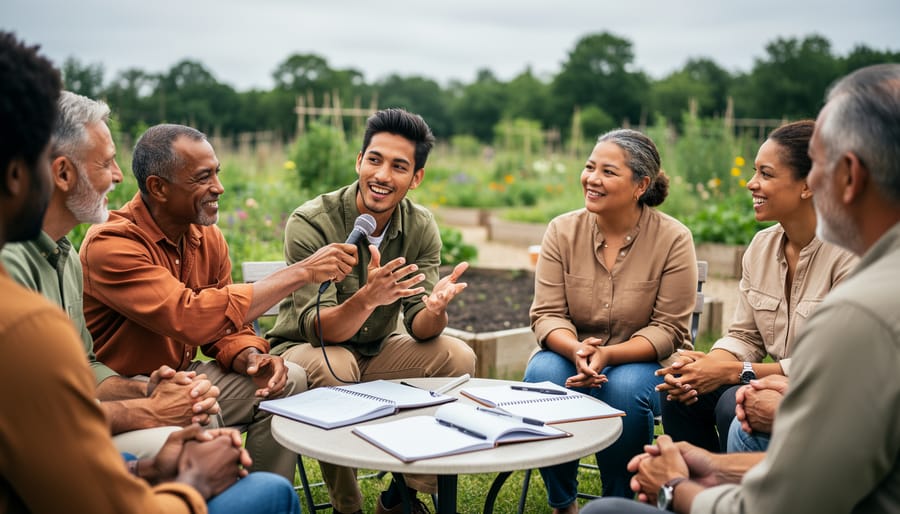
Community storytelling is the practice of gathering, shaping, and sharing personal narratives from community members to build connection, challenge dominant narratives, and inspire collective action for social change. Rather than top-down messaging from institutions or experts, this approach centers the lived experiences of people most affected by the issues at hand.
The power lies in authenticity. When someone shares how a discriminatory housing policy affected their family, or how a community garden transformed their relationship with neighbors, those first-person accounts carry weight that statistics and policy briefs cannot match. These stories create emotional resonance, shift perceptions, and motivate people to reimagine what’s possible in their own communities.
Across Canada, organizations working on environmental justice, reconciliation, and equity are turning to community storytelling as a core strategy for narrative change. Youth-led climate groups document how rising temperatures affect northern communities. Indigenous-led initiatives reclaim cultural narratives long suppressed by colonial systems. Grassroots advocates collect stories that reveal systemic barriers and illuminate pathways forward.
This article explores what community storytelling looks like in practice. You’ll learn how the process actually shifts public narratives, discover different approaches suited to various contexts and goals, see real examples from Canadian communities, and get answers to common questions about bringing this work into your own organization. Whether you’re an educator, nonprofit leader, or community organizer, these stories already exist in your community. The question is how to honor them, amplify them, and harness their power for meaningful change.
What Community Storytelling Means
Community storytelling is the practice of gathering, sharing, and amplifying the real experiences of people who live in a community, told in their own voices. Unlike traditional storytelling performed by individual artists or institutional communications crafted by organizations, community storytelling centres the perspectives of those directly affected by an issue, event, or place. The stories come from residents themselves, and they retain ownership and control over how their narratives are shared.
This approach recognizes that the people closest to a challenge often hold the deepest understanding of it. A single mother navigating affordable housing, an elder preserving traditional land knowledge, a newcomer building a life in a new city, each carries insights that statistics and policy briefs cannot capture. When these voices come together, they create a collective narrative that reflects the community’s diversity, strengths, and aspirations.
- Community Storytelling
- The practice of community members sharing their lived experiences in their own words to build understanding, preserve culture, and drive change.
- Narrative Change
- The process of shifting dominant public perceptions and assumptions about an issue or group through strategic storytelling and communication.
- Collective Voice
- The combined perspectives of multiple community members that together represent a broader, more authentic view than any single story or institutional message could provide.
- Lived Experience
- Firsthand knowledge and insight gained from directly experiencing a situation, challenge, or identity rather than observing or studying it from outside.
What sets community storytelling apart is authenticity. These aren’t polished public relations narratives shaped to serve an agenda. They’re raw, honest accounts that reveal complexity, contradiction, and hope. They preserve cultural memory and challenge stereotypes. They make visible what has been overlooked and give language to experiences that policy-makers and media often miss or misrepresent. Community storytelling transforms individuals from subjects of research or beneficiaries of programs into active narrators of their own lives and experts on their own realities.
How Community Storytelling Works
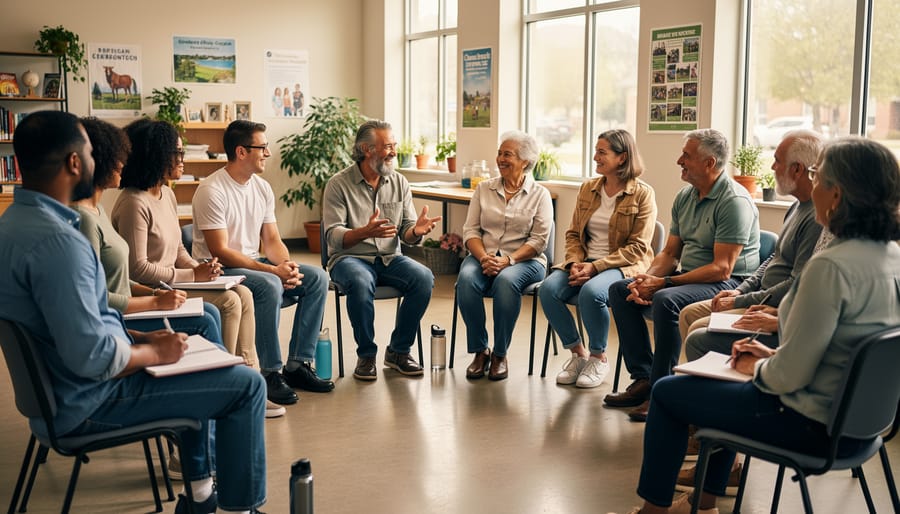
Building Trust Through Authentic Voices
When a community member shares their own experience, struggling to find affordable childcare, witnessing a watershed restored, or navigating systemic barriers, listeners respond differently than they would to a government report or corporate statement. These firsthand accounts carry a weight that polished institutional messaging simply can’t replicate.
The speaker has lived it. They know the details that matter: what it actually feels like, which solutions work, where the system fails. This lived expertise creates immediate credibility. Audiences recognize authenticity and respond with trust rather than skepticism.
Beyond credibility, personal stories forge emotional connection. When a newcomer describes their first Canadian winter or an elder recounts traditional land stewardship practices, listeners see individuals, not statistics. They understand contexts and complexities that data alone obscures.
This combination, credible experience plus emotional resonance, opens minds in ways that expert testimony or policy briefs rarely achieve. People remember stories. They share them. They change their thinking based on them, because authentic voices make abstract issues profoundly human.
Shifting Dominant Narratives
Dominant narratives, the widely accepted stories society tells itself about who matters, what’s possible, and how things work, often exclude or misrepresent the experiences of marginalized communities. Community storytelling disrupts these narratives by introducing counter-stories that reveal complexity and humanity where stereotypes once stood.
The shift happens through repetition and diversity. When a single mother shares how systemic barriers, not personal failure, keep her in poverty, it plants a seed. When dozens of parents, workers, and advocates share similar stories from different angles, they create a chorus that’s hard to ignore. Policymakers, media, and the public begin to see patterns that challenge simplistic explanations.
These stories work because they bypass abstract arguments and connect emotionally. A newcomer describing her contributions to her neighbourhood is more persuasive than statistics about economic impact. An elder explaining his relationship to a watershed carries weight that a scientific report alone cannot.
Over time, repeated exposure to authentic community voices reshapes how issues are understood and discussed. What was once framed as an individual problem gets recognized as a systemic issue requiring collective action. The community’s truth becomes part of the broader conversation, shifting the terms of debate and opening space for new solutions rooted in lived experience rather than assumptions.
Forms and Approaches to Community Storytelling
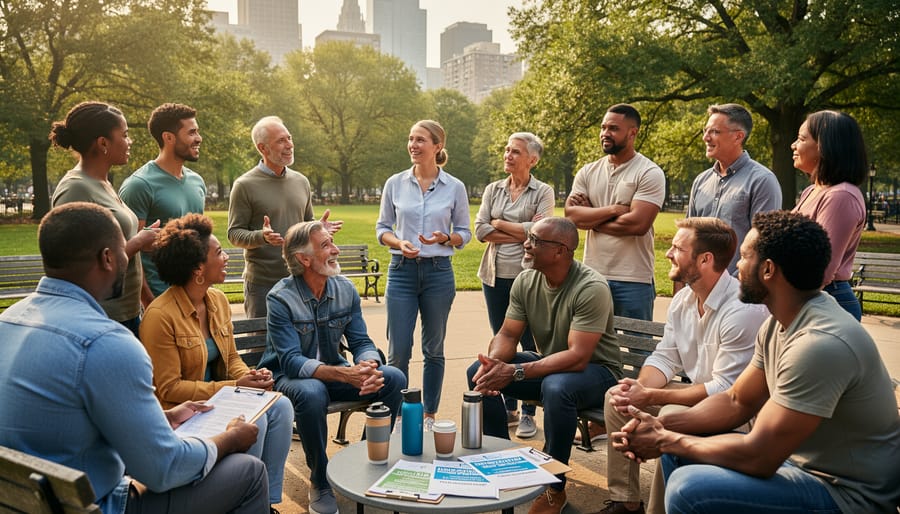
Community storytelling takes many shapes, each offering distinct advantages depending on your community’s resources, culture, and goals. Some approaches draw on centuries-old traditions, while others harness the reach of digital platforms. The format matters less than finding one that honours your community’s voice and connects with the audiences you need to reach.
Oral history projects remain a foundational approach, particularly for communities preserving intergenerational knowledge or documenting experiences that formal records overlook. Trained community members conduct recorded interviews with elders, longtime residents, or people who’ve lived through significant events. These conversations capture nuance, emotion, and context that written accounts often miss.
Digital platforms have expanded the toolkit considerably. Communities now create:
- Oral history archives with searchable audio or video interviews
- Digital story collections combining personal narratives with photos and music
- Participatory video projects where community members film and edit their own stories
- Story circles, intimate gatherings where people share experiences around a common theme
- PhotoVoice initiatives pairing photography with written or spoken reflections
- Social media campaigns amplifying community voices through coordinated storytelling
- Community theatre performances based on collected narratives
- Podcast series featuring long-form conversations and documentary storytelling
Story circles deserve special mention for their accessibility. Groups of eight to twelve people meet regularly to share personal experiences related to a theme, neighbourhood change, immigration journeys, relationships with the land. These gatherings build trust and often reveal shared experiences that participants didn’t know they had in common. The events bring people together in ways that strengthen community bonds while generating stories for broader sharing.
Participatory video puts cameras directly into community hands. Rather than extracting stories through interviews, this method trains people to document their own lives and concerns. The resulting films carry authenticity that professionally produced documentaries struggle to match, and the production process itself often becomes a catalyst for community organizing.
Public campaigns combine multiple formats, billboards featuring community members’ portraits and quotes, coordinated social media storytelling, live events where people share experiences, and traditional media outreach. These integrated approaches meet different audiences where they are, repeating core narratives through varied channels until they shift public perception.
The best approach depends on your community’s comfort with technology, existing cultural practices, available resources, and strategic goals. Many successful initiatives blend formats, starting with intimate story circles and expanding to digital archives, performances, or campaigns as the project grows.
Where Community Storytelling Makes an Impact
Environmental and Climate Action
Communities facing environmental threats often turn to storytelling to make abstract issues tangible and urgent. A fishing community documenting how warming waters have changed their catch tells a more compelling climate story than scientific data alone. Urban residents sharing memories of a demolished wetland can galvanize support for green infrastructure that charts and reports cannot.
These narratives work because they ground environmental concerns in lived experience. When elders describe how a river has changed over decades, or parents explain why they worry about playground air quality, they create emotional entry points for audiences who might tune out technical briefings. Indigenous communities have long used oral traditions to pass down ecological knowledge, and this approach now shapes contemporary climate campaigns.
Story-based advocacy also shifts who gets heard in environmental decisions. Personal accounts from those directly affected challenge the notion that only scientists or politicians can speak credibly about ecological issues.
Truth, Reconciliation, and Indigenous-Led Initiatives
Indigenous communities across Canada have long used storytelling to pass down knowledge, maintain cultural identity, and assert sovereignty over their own narratives. In reconciliation work, storytelling becomes a powerful counter to the colonial histories that dominated textbooks and public discourse for generations. When Elders share residential school experiences, when youth document language revitalization efforts, or when land defenders explain their connection to territory, they reclaim space in the national conversation and challenge settler assumptions.
These stories educate non-Indigenous Canadians about histories they were never taught and perspectives they rarely encounter in mainstream media. Listening to firsthand accounts of cultural loss and resilience builds empathy that policy documents alone cannot achieve. Community-led storytelling initiatives, whether through digital archives, public art, or oral history projects, create opportunities for settlers to learn directly from Indigenous voices rather than through intermediaries.
When communities honour reconciliation through storytelling, they shift the narrative from victimhood to strength, from erasure to visibility, and from silence to action.
Social Equity and Inclusion
Community storytelling has proven particularly powerful in advancing social equity by giving voice to those typically excluded from policy discussions. In anti-poverty work, for instance, people with lived experience of homelessness or food insecurity share their realities to counter harmful narratives about individual failure, helping policymakers and the public understand systemic barriers. These firsthand accounts have influenced housing strategies, income support programs, and access to services that directly strengthen community well-being.
Gender equality initiatives use storytelling to expose workplace discrimination, caregiving burdens, and gender-based violence that statistics alone cannot capture. Women sharing their experiences have shifted workplace policies and public attitudes about pay equity and parental leave.
Newcomer integration programs increasingly center immigrant and refugee stories to challenge xenophobic narratives. Settlement agencies facilitate story circles where newcomers share their contributions, skills, and aspirations, reshaping how receiving communities understand immigration. These personal narratives humanize abstract debates and build empathy across cultural divides, demonstrating that authentic voices create the foundation for genuine inclusion.
Success Stories: Community Storytelling in Action
Communities across Canada are proving that well-executed storytelling can shift narratives and produce tangible change. These examples showcase the collaborative, community-led approaches that drive meaningful impact.
In Halifax, the North End Community Health Centre partnered with refugee and immigrant residents to create “Our Stories, Our Strength,” a digital storytelling project that challenged stereotypes about newcomers. Participants filmed short videos about their contributions to the neighbourhood, opening businesses, volunteering at schools, organizing cultural festivals. When these stories were shared at city council meetings and through local media, they directly countered narratives portraying refugees as burdens. The result was measurable: the city expanded settlement services and three participating storytellers were appointed to community advisory committees. This project demonstrates how authentic voices can reshape policy conversations and produce healthy communities outcomes that benefit everyone.
In northern Manitoba, the Pimicikamak Cree Nation launched a youth-led oral history initiative to document Elders’ knowledge about traditional land use and the impacts of hydroelectric development. Young people recorded, transcribed, and shared these stories through radio broadcasts and school curricula. The stories became evidence in ongoing negotiations with Manitoba Hydro, strengthening the Nation’s position in talks about environmental remediation and revenue sharing. Equally important, the project reconnected youth with cultural knowledge and traditional practices, creating intergenerational bonds.
The Waterloo Region’s “Stories of Home” brought together people experiencing homelessness to share their journeys through facilitated story circles and a public photo exhibit. Their first-person accounts challenged assumptions about addiction and personal responsibility, humanizing a population often reduced to statistics. Local media coverage shifted from crime-focused reporting to solution-oriented stories about housing and support services. Within eighteen months, regional council increased funding for supportive housing and hired two storytellers as peer navigators in the shelter system.
Common Questions About Community Storytelling
Community storytelling raises important questions about ownership, ethics, and impact that every practitioner should address before starting.
Who owns the stories communities share?
The storytellers themselves retain ownership of their narratives. Organizations facilitating the process act as stewards, not owners, and should establish clear agreements about how stories will be used, stored, and shared before collection begins.
How do we ensure ethical storytelling practices?
Start with informed consent that explains exactly how stories will be used. Give storytellers control over what they share, how they’re identified, and the right to withdraw their story later. Build in review processes so participants can approve final versions before publication.
What if community members disagree about their narrative?
Disagreement is natural and often productive. Rather than forcing consensus, create space for multiple perspectives and acknowledge complexity in how you present stories. The goal is representing authentic community voices, not a single unified message.
How can we measure if storytelling changes narratives?
Track both immediate reach (audience size, media coverage, engagement) and longer-term shifts such as policy changes, funding decisions, or surveys showing attitude shifts. Qualitative feedback from storytellers and audiences about changed perspectives matters as much as quantitative metrics.
Protecting vulnerable storytellers requires careful attention throughout the process. Some participants face risks if identified publicly, immigration concerns, employment consequences, or community backlash. Offer options for anonymity or pseudonyms, let storytellers choose which details to include, and consider the potential harm before sharing. For youth, survivors of violence, or those in precarious situations, add extra safeguards like legal review and trauma-informed facilitation. The power of community storytelling comes from authenticity, but safety always comes first. When practitioners center the wellbeing and agency of storytellers, they build trust that strengthens both the process and the narratives that emerge.
Community storytelling isn’t a top-down campaign or a polished marketing strategy. It’s what happens when people gather, share their truths, and decide together which narratives deserve wider reach. This collaborative practice gives communities the tools to rewrite stories that have been written about them, often inaccurately or incompletely, by others.
For educators, non-profit leaders, activists, and policymakers, supporting community storytelling means stepping back to listen first. It means creating space for voices that haven’t been centered in public conversation. It means trusting that people closest to an issue hold insights no expert study can replicate. Whether you’re designing a program, advocating for policy change, or building partnerships, amplifying authentic community voices strengthens your work and grounds it in lived reality.
The shift happens story by story, conversation by conversation. A neighbourhood shares its vision for green space, and planners listen. Newcomers describe their integration challenges, and services adapt. Indigenous communities reclaim their histories, and settlers learn what reconciliation truly requires. Each story chips away at outdated assumptions and builds new understanding.
When communities control their own narratives, they don’t just change minds, they change systems. They create the conditions for policies that reflect their needs, services that honour their dignity, and futures they’ve shaped themselves. That’s the promise of community storytelling: vibrant, sustainable communities built on the foundation of voices heard, stories shared, and change created together.