
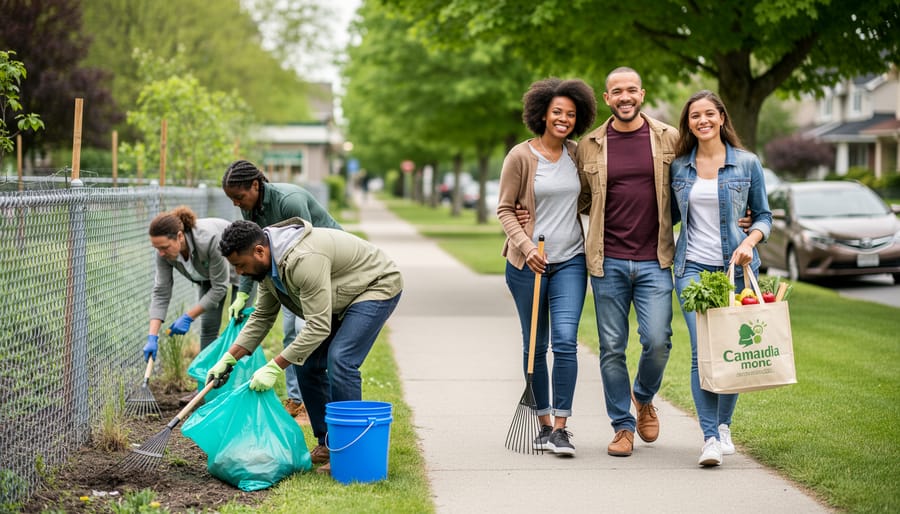
A healthy community is one where people can thrive physically, socially, and economically through accessible services, green spaces, strong social connections, and opportunities for all residents to participate in shaping their shared future. From Vancouver’s neighborhood-led walking groups to rural Saskatchewan’s community gardens that feed families and build friendships, healthy communities across Canada prove that small, collaborative actions create lasting change.
What makes these communities work isn’t million-dollar budgets or top-down planning. It’s neighbors organizing street clean-ups, parents advocating for safer playgrounds, local businesses partnering with food banks, and municipal leaders listening to what residents actually need. Canada’s Healthy Communities Initiative has supported hundreds of these grassroots efforts since its inception, demonstrating that transformation happens when people stop waiting for permission and start building together.
The evidence is compelling. Communities that invest in walkable streets see better physical health outcomes. Neighborhoods with active community centers report lower social isolation among seniors. Towns that prioritize affordable housing and public transit give more families the chance to put down roots and contribute. These aren’t abstract concepts. They’re measurable improvements in how people live, connect, and support one another.
You don’t need specialized training to strengthen your community. You need curiosity about what your neighbors care about, willingness to show up, and patience to build trust over time. Whether you’re an educator wanting to expand after-school programs, a non-profit leader seeking collaboration partners, or simply someone who believes your street could be more connected, you already have what it takes to start.
This guide walks you through what defines a healthy community, shares success stories from across Canada that prove change is possible regardless of budget or population size, and offers practical steps to launch or join initiatives in your area.
What Makes a Community Healthy?
A healthy community is more than just a place with good hospitals and clean parks. When Canadians talk about healthy communities, they’re describing neighborhoods where people genuinely thrive across every dimension of their lives. These are places where you can walk to the corner store and strike up a conversation, where local businesses provide meaningful work, where kids play safely in green spaces, and where cultural festivals bring diverse voices together. The physical health aspects certainly matter, but they’re just one thread in a much richer tapestry.
Think about the last time you felt truly connected to your neighborhood. Maybe it was at a community garden where you traded tomatoes with a neighbor, or during a local arts event that made you proud to live there. These moments reveal what community health really means: the web of relationships, opportunities, and environments that shape our daily experiences.
The most vibrant communities share several interconnected pillars:
- Strong social connections where neighbors know and support each other, reducing isolation and building trust
- Economic opportunities that provide living wages and pathways to financial stability for all residents
- Environmental sustainability including green spaces, clean air and water, and climate-resilient infrastructure
- Cultural vibrancy that celebrates diversity and creates spaces for artistic expression and identity
- Accessible services from healthcare to education that meet residents where they are
Here’s what makes healthy communities powerful: these elements reinforce each other. When you create gathering spaces, social connections deepen. Those relationships often spark local enterprises. Green infrastructure improves both physical and mental health while creating beautiful places for community events. Economic stability gives families bandwidth to participate in cultural life and volunteer efforts.
No single intervention fixes everything, which is actually good news. It means communities can start anywhere and watch the benefits ripple outward. A modest investment in one area creates momentum that touches others, building the kind of places where everyone can flourish.
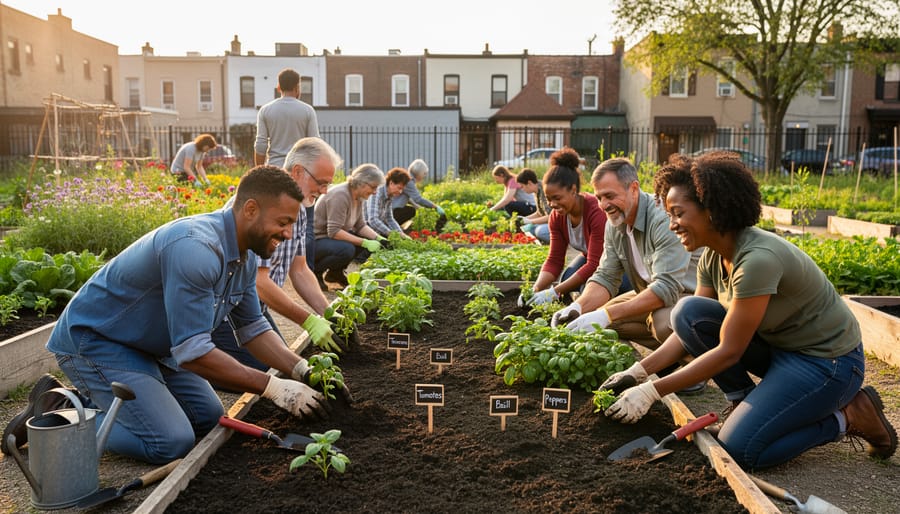
The Building Blocks That Make It Work
People Power: When Residents Lead the Way
The most powerful community transformations don’t begin in boardrooms or government offices, they start with one person who sees a problem and decides to do something about it. A parent who turns an empty lot into a play space. A retiree who starts a tool library from their garage. A teenager who organizes neighborhood cleanups. These aren’t professional community developers; they’re ordinary residents who become extraordinary catalysts simply by taking that first step.
What sets successful grassroots leaders apart isn’t expertise or resources, it’s their deep connection to the community they’re trying to improve. They understand the real challenges because they live them daily. When Sarah in Halifax noticed seniors in her building were isolated and lonely, she didn’t wait for a formal program. She started weekly tea gatherings in the lobby, which grew into a thriving intergenerational community hub that now serves 200 residents.
This resident-led approach creates authentic change because it’s rooted in lived experience rather than external assumptions. Communities know what they need better than any outside expert. Research shows that when multi-sector partnerships drive change having residents at the leadership table, not just as participants, makes initiatives more responsive and sustainable.
You don’t need permission to start. The most impactful community leaders began by asking neighbors what mattered to them and taking one small action. That courage to begin, multiplied across a community, becomes unstoppable momentum.
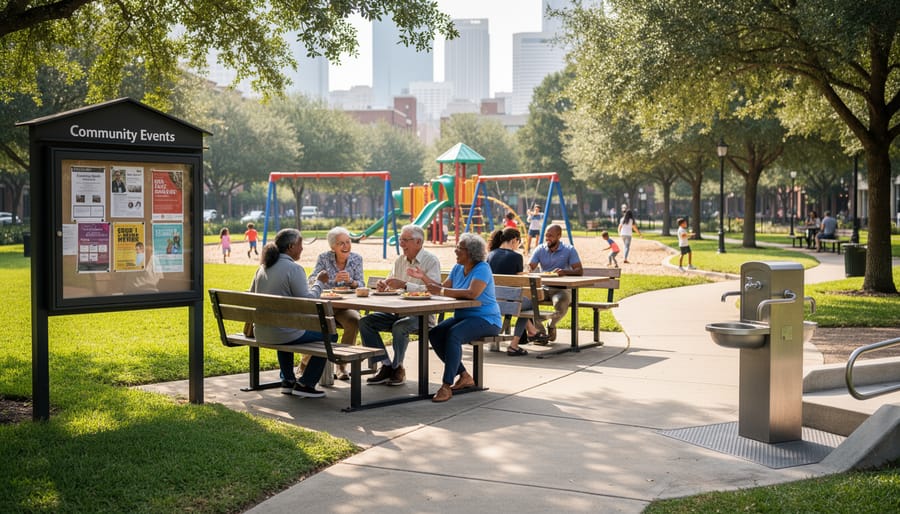
Partnerships That Multiply Impact
When different sectors come together around a shared vision, the results outpace what any single organization could achieve alone. Cross-sector partnerships bring complementary strengths to the table: non-profits understand community needs and trust dynamics, local governments provide policy support and infrastructure, businesses contribute expertise and resources, and grassroots groups offer lived experience and authentic connections.
The magic happens in the overlap. A business might donate meeting space while a non-profit coordinates programming and the municipality adjusts bylaws to remove barriers. Each partner fills gaps the others can’t address, creating a web of support that’s far more resilient than any solo effort.
These partnerships also build momentum. When residents see their credit union, community centre, and city council all working toward the same goal, it signals that change is real and possible. The collaboration itself becomes proof that transformation is underway.
Start by mapping who’s already doing related work in your community. That youth program, the environmental group, the local chamber, they’re all potential partners. Reach out not with a fully formed plan, but with curiosity about alignment and possibilities. The strongest partnerships emerge from conversations where everyone contributes ideas rather than one group dictating terms.
Regular check-ins keep partnerships healthy. Set shared goals, clarify roles, celebrate wins together, and address tensions early. The investment in relationship-building pays dividends when challenges arise, because partners who know and trust each other find creative solutions instead of retreating to their corners.
Real Communities, Real Change: Stories from Across Canada
Small Towns Making Big Waves
In places where everyone knows your name, change often starts with a conversation at the local coffee shop or a chance meeting after church. Small Canadian towns are proving that tight-knit communities and limited resources can actually be advantages when it comes to building healthier places to live.
Take Berwick, Nova Scotia, where residents transformed an abandoned railway corridor into a multi-use trail that now connects the town centre to schools, parks, and neighbouring communities. The project started with twelve volunteers and a donation of gravel. Within two years, walking and cycling rates doubled, and local businesses reported increased foot traffic. The secret? Everyone pitched in what they could, time, materials, or expertise, and the town hall waived permit fees to keep costs near zero.
In Morden, Manitoba, a group of retirees noticed newcomers struggled to integrate. They launched monthly potluck gatherings in the community centre, pairing long-time residents with immigrant families. The initiative cost nothing but created friendships that helped newcomers find jobs, navigate services, and feel at home. Within eighteen months, the town saw improved retention of new residents and stronger social bonds across cultural lines.
These stories share common threads: leaders who knew their neighbours personally, flexibility to adapt quickly without layers of bureaucracy, and creative use of existing assets. Small towns often move faster because decisions involve fewer stakeholders, and trust runs deeper when you’re working alongside people you’ve known for years.
Urban Neighborhoods Finding Their Voice
In cities across Canada, neighborhoods once written off as disconnected or struggling are proving that urban density can be a strength, not a barrier. From Vancouver’s Downtown Eastside to Toronto’s Parkdale and Montreal’s Parc-Extension, residents are turning underused spaces into vibrant community hubs and transforming how neighbors relate to one another.
Take Toronto’s Regent Park, once known primarily for its challenges. Through a resident-led community benefits framework, locals didn’t just participate in the neighborhood’s physical redevelopment, they shaped it. Community members negotiated for affordable housing guarantees, jobs in construction, and spaces designed around their needs. The Daniels Spectrum community cultural hub emerged directly from resident input, now hosting everything from youth programs to arts performances that reflect the neighborhood’s diverse identity.
In Vancouver’s Mount Pleasant, neighbors tackled isolation and gentrification pressure by creating “living room projects”, regular gatherings in homes, parks, and cafes where people share skills, stories, and support. These simple meet-ups evolved into mutual aid networks, collective advocacy for affordable housing, and neighborhood-wide events that strengthen bonds across income levels and cultural backgrounds.
Montreal’s Ruelle Verte initiative shows how small changes ripple outward. Residents transformed neglected back alleys into green corridors with gardens, murals, and seating areas. What started as beautification became social infrastructure. Neighbors who never spoke now garden together, children play safely, and the alleys host block parties that knit formerly isolated households into genuine community.
The pattern is consistent: change starts when residents decide their neighborhood deserves better and take the first step themselves. They don’t wait for perfect conditions or outside permission. They map assets, recruit a core group, pilot small projects that build trust, then expand based on what works. City hall and funders often follow once momentum is visible, but the spark comes from people who live there and refuse to accept disconnection as inevitable.
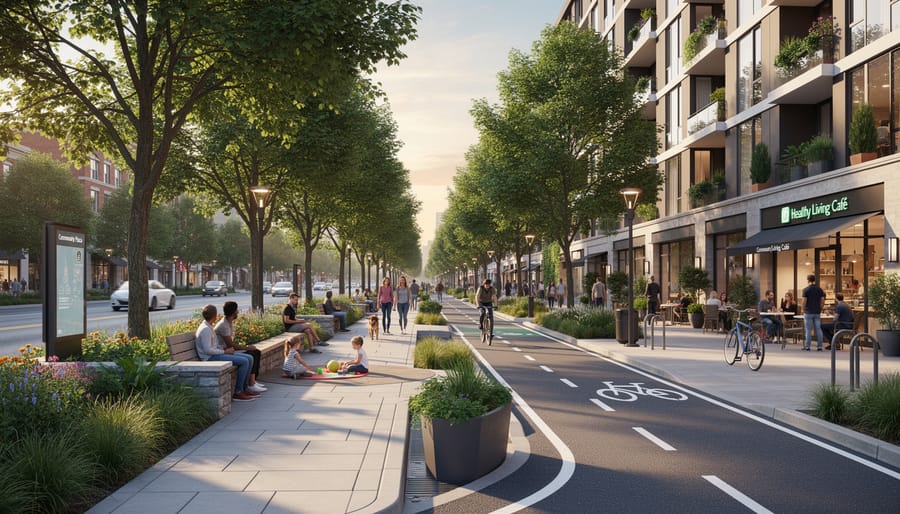
Your Roadmap to Building a Healthier Community
Starting Where You Are
You don’t need a comprehensive plan or perfect conditions to begin strengthening your community. The most powerful starting point is looking honestly at what already exists around you.
Start by walking your neighborhood with fresh eyes. Notice the spaces where people naturally gather, the local businesses that serve as informal hubs, and the residents who already show up when help is needed. These existing assets, whether it’s a beloved park, an active seniors’ group, or a community-minded café owner, are your foundation.
Talk to your neighbors, not about problems, but about what they value most. Ask the parent at the bus stop what would make their week easier. Chat with the shop owner about what they wish existed nearby. These conversations reveal shared priorities and often uncover allies you didn’t know you had.
Choose one small, achievable action that addresses something people care about. Maybe it’s organizing a monthly coffee meetup in a public space, starting a tool library from your garage, or coordinating a neighborhood clean-up. The goal isn’t to solve everything, it’s to create momentum and demonstrate that change is possible.
Document what you learn and celebrate small wins publicly. When others see that someone like them took action and made a difference, they’ll join you. You’re not building from scratch; you’re connecting dots that already exist and inviting others to do the same.
Finding Your People and Resources
Finding people who share your vision for a healthier community often starts closer than you think. Look first to neighbors, coworkers, friends from the school pickup line, or regulars at your local coffee shop. Community Facebook groups, library bulletin boards, and recreation centers reveal who’s already working on similar issues. Attend town halls, volunteer events, or neighborhood clean-ups where engaged residents gather. One conversation can lead to five more connections.
Existing networks save you from building everything alone. Most communities have established groups focused on health, environment, youth, or seniors. The United Way, community foundations, and municipal recreation departments maintain directories of local organizations. Reach out to introduce yourself and explore collaboration rather than competition. These groups often welcome fresh energy and may have resources to share.
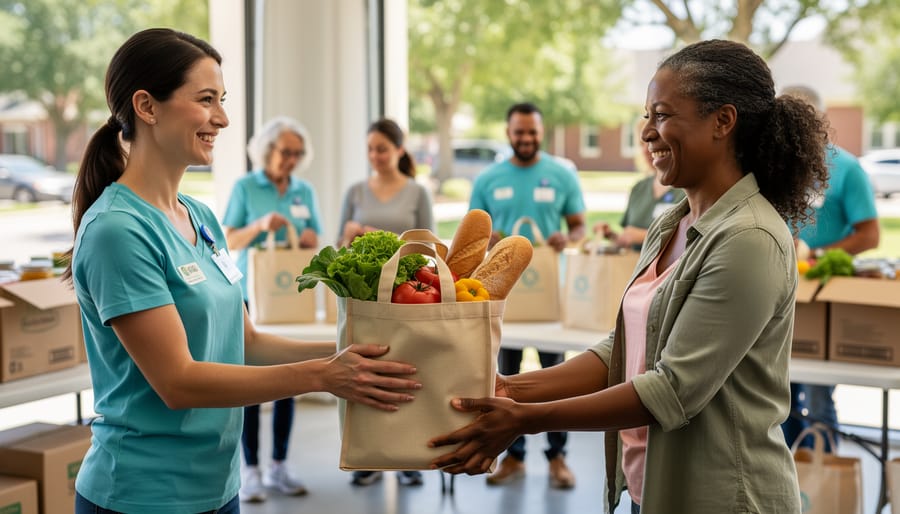
Funding doesn’t always mean grants. Start by identifying what you can accomplish with existing assets: donated space, volunteer time, in-kind contributions from local businesses. When you do need money, community foundations offer small grants perfect for pilot projects. Provincial health authorities sometimes fund wellness initiatives. Crowdfunding through platforms like GoFundMe works surprisingly well when your community understands the need you’re addressing.
Municipal staff in community development, recreation, or planning departments exist specifically to support initiatives like yours. They know funding cycles, can connect you with other groups doing related work, and understand bureaucratic shortcuts. Book a coffee meeting. Ask questions. Most are genuinely eager to help residents take action.
Your province’s healthy communities coalition or network provides training, toolkits, and peer support from people several steps ahead of you. They’ve solved problems you haven’t encountered yet.
Navigating Common Challenges Together
Every community builder faces moments when the path forward feels uncertain. Understanding that these challenges are normal, and solvable, helps you persist when obstacles arise.
Volunteer burnout tops the list of struggles most initiatives encounter. People start with enthusiasm, then gradually fade as responsibilities pile up alongside their jobs, families, and other commitments. The solution lies in rotation and realistic expectations. Successful communities build teams where no single person carries everything. They create specific, time-limited roles rather than open-ended commitments. A youth program in New Brunswick saved itself by shifting from expecting year-round volunteers to recruiting people for eight-week terms with clear end dates. This approach keeps energy fresh and prevents the exhaustion that comes from feeling trapped in endless obligations.
Funding uncertainty creates its own anxiety. Grant cycles end, sponsors move on, and budget shortfalls threaten promising programs. Communities that weather these storms diversify their support base early. They combine grants with small donations, earned revenue from services or events, and in-kind contributions. A food security project in Saskatchewan stabilized after realizing that twenty local businesses donating $500 each created more reliable funding than chasing one large grant annually. They also learned to build financial reserves during good years to bridge lean periods.
Momentum naturally ebbs after initial excitement fades. The trick is maintaining visibility and celebrating progress even when work feels routine. Monthly community gatherings, regular social media updates showing small wins, and annual events that reconnect people to the mission all help. One housing initiative holds quarterly “story circles” where residents share how the program changed their lives, reminding everyone why the work matters.
Bridging diverse perspectives challenges even the most inclusive communities. Different ages, cultures, and experiences bring different priorities. Rather than forcing consensus, effective communities create structured ways for everyone to be heard before decisions happen. They use facilitation techniques that give quieter voices space and explicitly invite disagreement as valuable input. A Vancouver neighborhood learned to start planning meetings by asking, “What concerns haven’t we addressed yet?” This simple question surfaced issues that would have otherwise derailed implementation later.
These challenges don’t disappear, but they become predictable patterns you can plan for rather than crises that catch you off guard.
The journey toward a healthier community doesn’t require a perfect plan or unlimited resources. It starts with you, right where you are, with the strengths and connections you already have. Across Canada, from coast to coast to coast, people just like you are proving that meaningful change is within reach when we act together.
You’ve seen how communities of all sizes are transforming themselves. Rural towns are creating gathering spaces that bridge generations. Urban neighborhoods are reclaiming their streets for play and connection. Indigenous communities are weaving traditional knowledge with modern approaches to wellness. What they all share is a commitment to showing up, listening to each other, and taking action, even when the path forward isn’t perfectly clear.
The growing movement of healthy communities across this country shows us something powerful: change doesn’t happen because of one hero or one breakthrough moment. It happens because of sustained, collective effort. It happens because someone decides to organize a neighborhood cleanup, start a community garden, or simply knock on a neighbor’s door to ask how they’re doing.
You’re not starting from scratch. You’re joining thousands of Canadians who believe our communities can be more connected, more vibrant, and more supportive of everyone who calls them home. The question isn’t whether healthy communities are possible. They’re happening right now. The question is: what role will you play in building yours?


+ There are no comments
Add yours